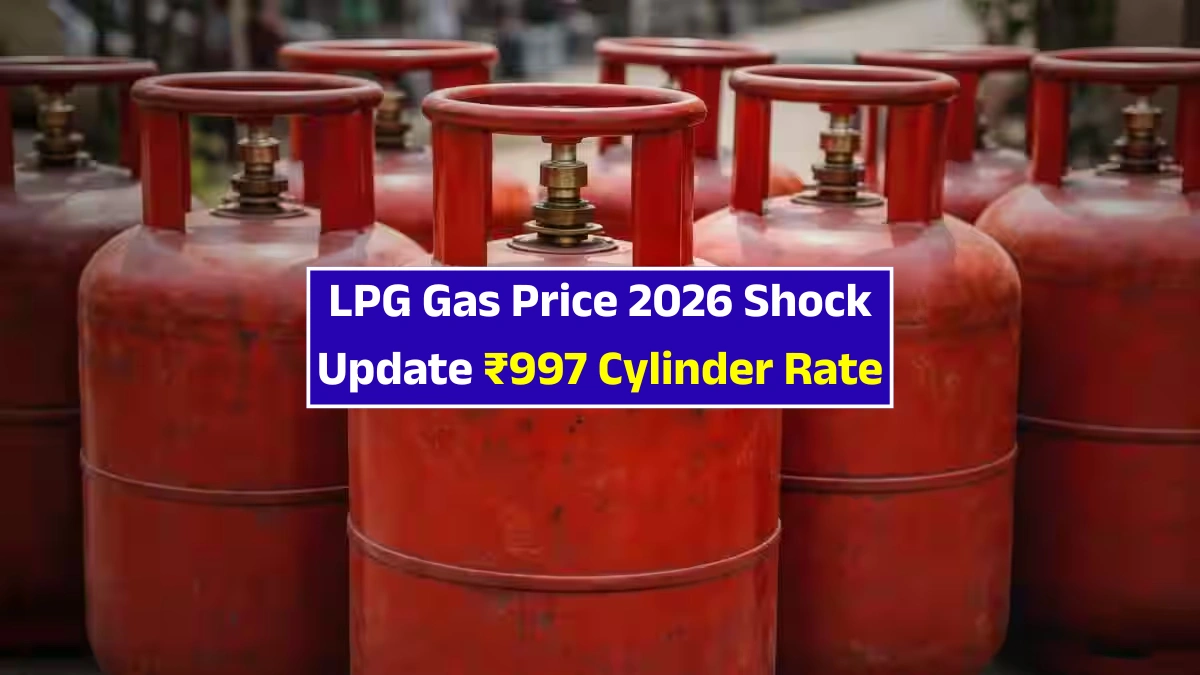
LPG Price Drop or Hike 2026: Cooking gas prices have once again become the center of attention for Indian households in 2026. Every kitchen depends on LPG, and even a small change in cylinder rates can shake monthly budgets. This year, the price movement has created confusion among consumers, with some areas seeing slight relief while others continue to face higher costs. Understanding the latest LPG rates, state-wise differences, and real impact on household spending is now more important than ever.
Cylinder price creates buzz
The latest update shows that the 14.2 kg domestic LPG cylinder is priced between ₹900 and ₹1,000 across most states. In regions like Madhya Pradesh, the rate is hovering around ₹950 to ₹997 depending on the city and distributor. This range has triggered discussions among consumers because expectations were set for a price drop. Instead, the market is showing a mixed trend where stability exists, but affordability still remains a concern for many households.
State rates reveal big gap
One of the biggest highlights of LPG pricing in 2026 is the variation across states. Prices differ due to local taxes, transportation charges, and distribution costs. Metro cities like Delhi and Mumbai often have slightly higher rates compared to smaller cities. Meanwhile, tier 2 and tier 3 cities may offer marginally lower pricing, but the difference is not significant enough to ease overall burden. This variation makes it essential for users to track their local gas rates regularly.
Key reasons behind changes
LPG prices are not random; they are directly linked to multiple global and domestic factors. The biggest influence comes from international crude oil prices. When crude oil becomes expensive, LPG prices follow the same trend. Currency fluctuations, especially the value of the Indian Rupee against the US Dollar, also play a crucial role. Additionally, government decisions on subsidy and taxation further impact the final price that consumers pay.
Major factors affecting LPG price
- Global crude oil market trends
- Rupee vs Dollar exchange rate
- Government subsidy policy changes
- Transportation and distribution costs
- Seasonal demand fluctuations
Subsidy support shrinking slowly
Subsidy has always been a relief factor for LPG users, especially in rural and middle-income households. In 2026, subsidies are still available for eligible users, but the amount has reduced compared to previous years. This means that even though subsidies exist, the effective cost paid by consumers remains relatively high. Direct Benefit Transfer continues to function, but many households now feel that the relief is not as impactful as before.
Household budget under pressure
Rising LPG prices have a direct effect on monthly expenses. A family that uses one cylinder per month now spends close to ₹1,000 just on cooking gas. For larger families or small businesses, this cost multiplies quickly. As a result, many households are rethinking their cooking habits, reducing wastage, and becoming more conscious about gas usage to maintain their budget balance.
Commercial users feel bigger hit
Commercial LPG cylinders, especially the 19 kg variant, are priced significantly higher than domestic cylinders. These cylinders often cost above ₹2,000 depending on the city. This directly impacts restaurants, street food vendors, and small businesses. The increased operational cost often gets passed on to customers, which is one of the reasons why food prices in many areas have also increased in recent months.
Domestic vs Commercial comparison
| Category | Cylinder Size | Average Price Range |
|---|---|---|
| Domestic LPG | 14.2 kg | ₹900 – ₹1,000 |
| Commercial LPG | 19 kg | ₹2,000 – ₹2,200+ |
| Small Domestic | 5 kg | ₹300 – ₹350 |
Smart usage becomes necessity
With prices staying high, consumers are now focusing more on efficient gas usage. Small changes in daily cooking habits can lead to noticeable savings over time. Using lids while cooking, avoiding unnecessary flame usage, and maintaining burners properly can reduce gas consumption. Many households are also exploring hybrid cooking options like induction stoves or solar cooking systems to cut down on LPG usage.
Easy ways to save LPG
- Use pressure cookers for faster cooking
- Keep burners clean for efficient flame
- Avoid cooking on high flame unnecessarily
- Cover utensils to retain heat
- Plan meals to reduce repeated cooking
Future trend keeps uncertain
The future of LPG pricing in 2026 looks uncertain rather than stable. Experts believe that global fuel prices will continue to fluctuate, which means LPG rates may also change frequently. While small reductions can happen occasionally, a major price drop seems unlikely unless crude oil prices fall significantly. This uncertainty keeps consumers alert and forces them to adapt their spending habits accordingly.
Government role remains crucial
Government policies will continue to play a major role in deciding LPG prices. Decisions related to subsidy, taxation, and distribution directly affect the final consumer rate. Any major announcement regarding subsidy increase or tax reduction can provide instant relief. At the same time, policy changes can also lead to sudden price hikes, making it important for consumers to stay updated with official updates.
Rural and urban impact difference
The impact of LPG price changes is not the same everywhere. Rural households often depend more heavily on subsidies and may feel a stronger financial burden when prices rise. Urban households, while financially more flexible, still experience pressure due to higher living costs. This difference highlights how LPG pricing affects different segments of society in unique ways.
Final Word: LPG Price Drop or Hike 2026
LPG pricing in 2026 reflects a balance between global fuel trends and domestic policy decisions. While there has been no major price drop, the current rates show a steady but high pricing pattern. For consumers, the best approach is to stay informed about local prices, use LPG efficiently, and explore alternative cooking options when possible. Until major global changes happen, LPG is expected to remain a significant part of household expenses, making smart usage the key to saving money.